
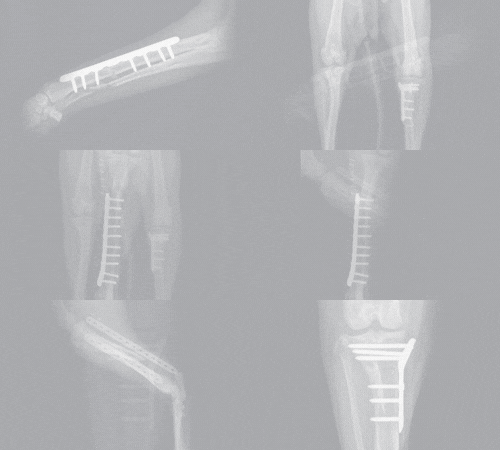
2.0&2.4MM T-adaption LCP
+ Description
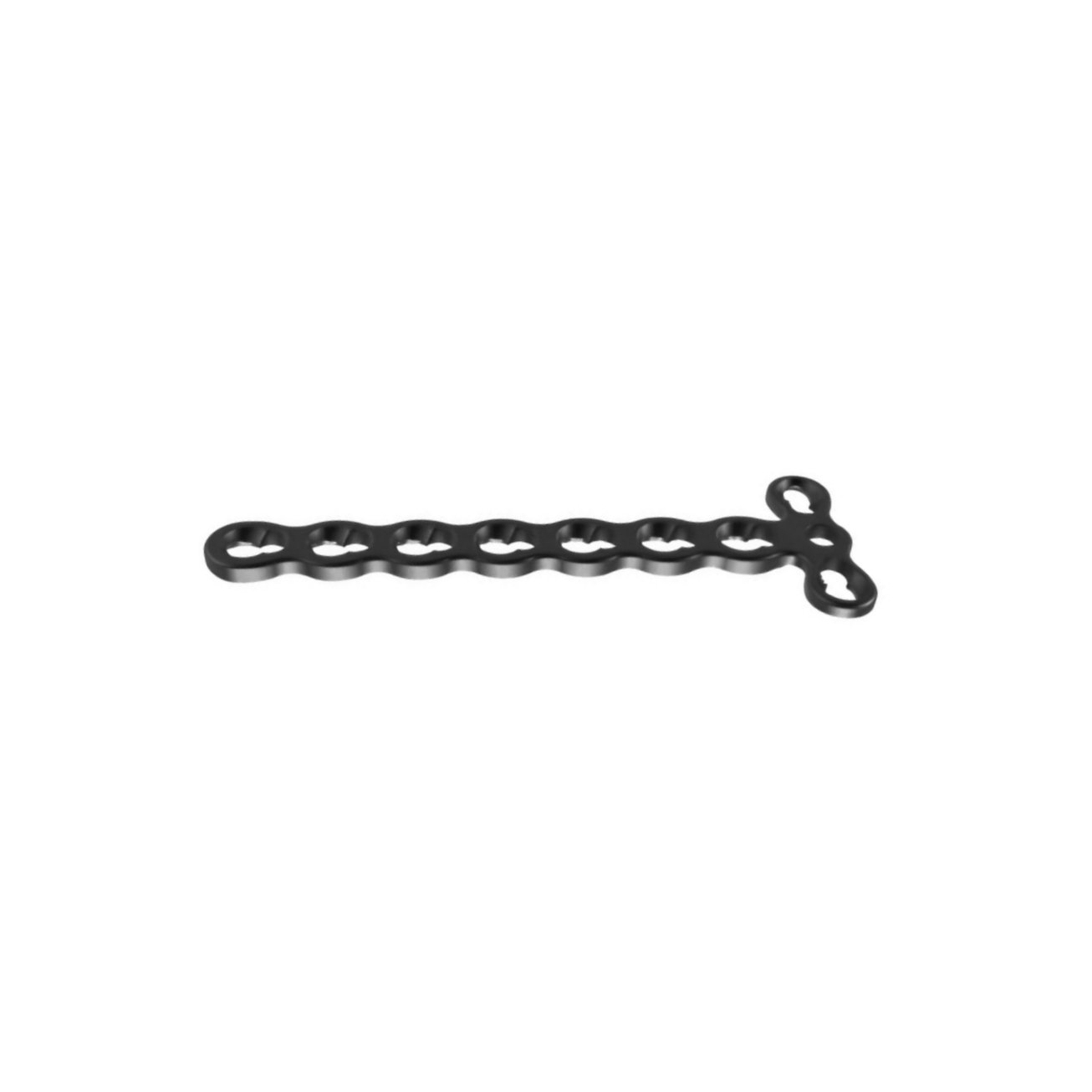
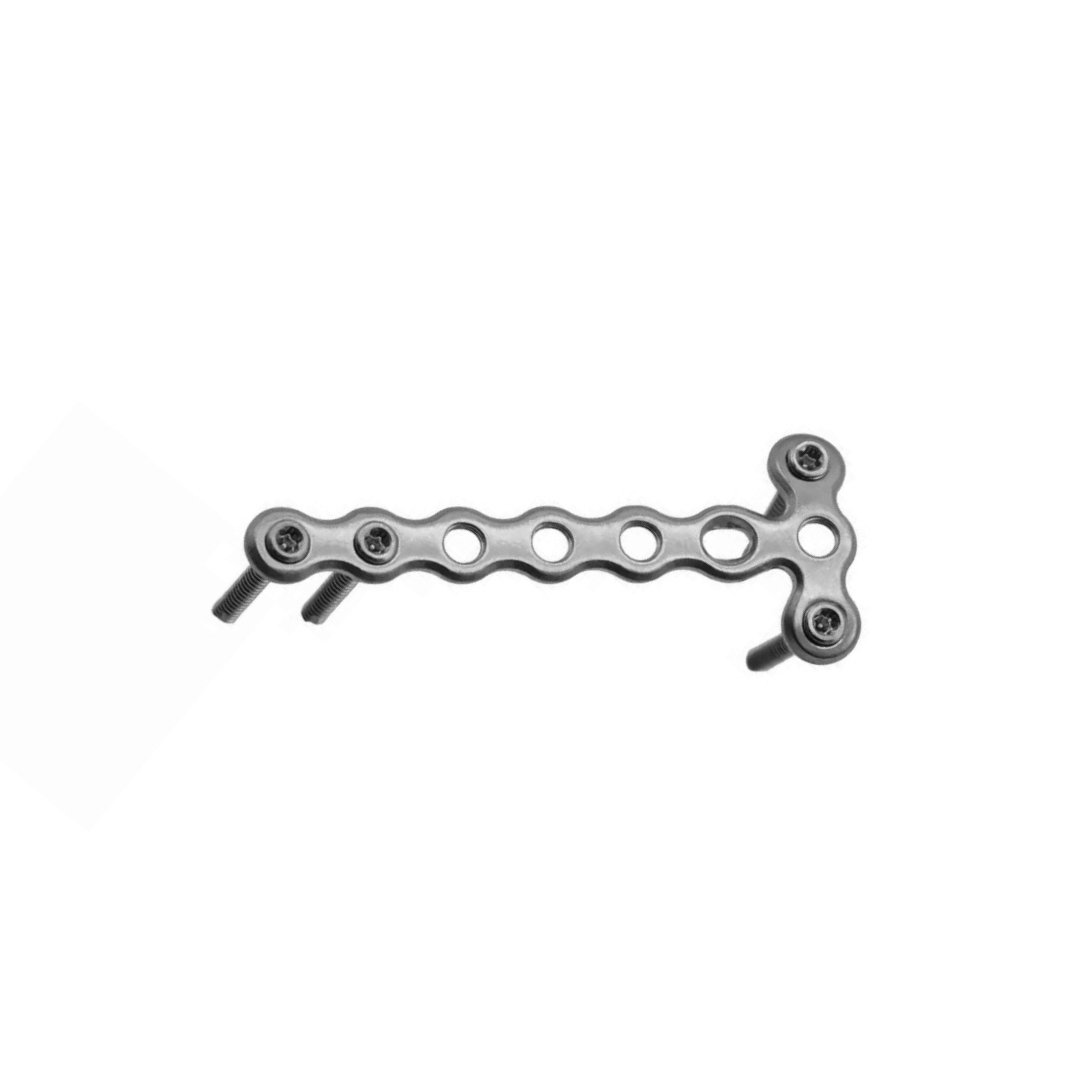
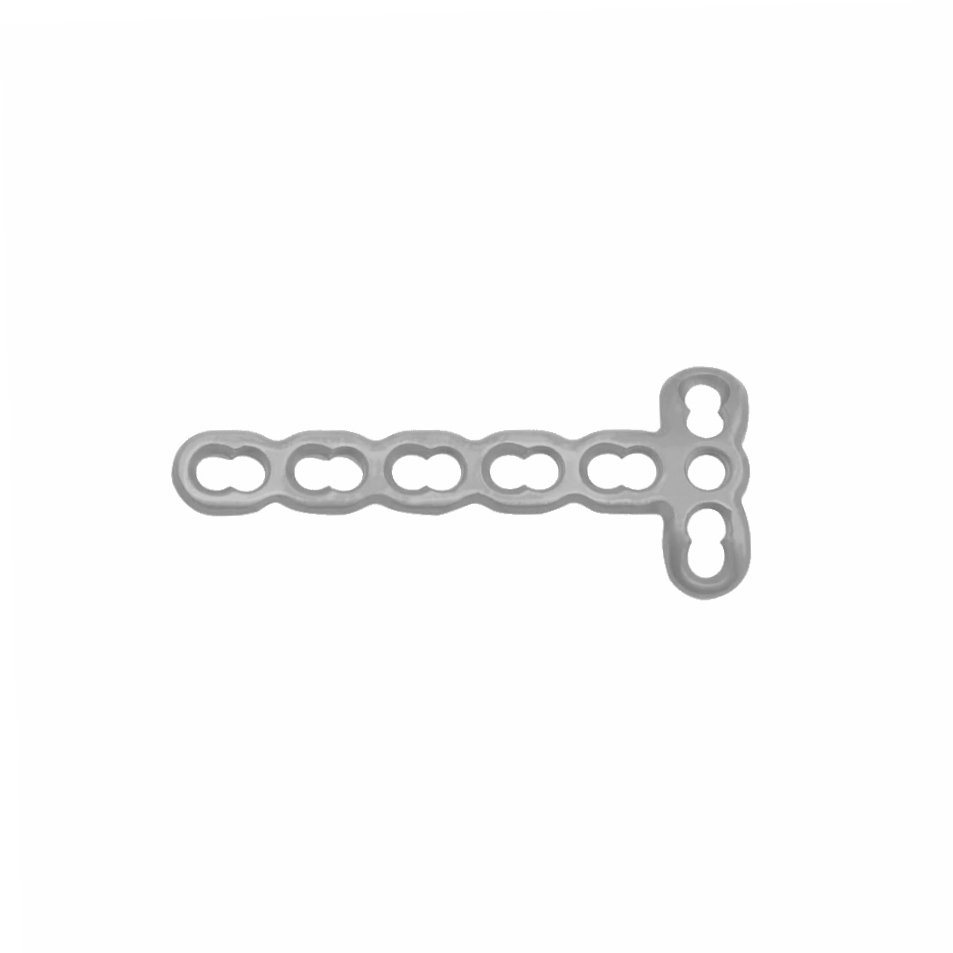
The Ø2.0 & Ø2.4mm T-Adaption Locking Compression Plate (LCP) is a small-fragment implant designed for the fixation of fractures, osteotomies, and reconstructions in delicate anatomical areas such as the hand, wrist, foot, ankle, and craniofacial skeleton. Its T-shaped configuration provides effective support and buttressing of small metaphyseal or articular fragments.
The plate features combi-holes compatible with both locking and cortical screws (Ø2.0mm or Ø2.4mm), offering the benefits of angular stability and axial compression in one system. Its low-profile, anatomically adaptable design allows for precise contouring, minimizing soft tissue irritation and promoting early mobilization.
+ Indications
- Fracture fixation of the phalanges and metacarpals
- Osteotomies
- Arthrodeses
- Replantations and reconstructions of phalanges and metacarpals, particularly in osteopenic bone
+ Key Feature
-
Available in Titanium.
- Plate has combi holes and round holes. Combi holes allow fixation with locking screws in the threaded section and cortex screws in the dynamic compression unit section for compression.
- The shaft holes accept 2/2.4/2.7MM locking screws in the threaded portion or 2/2.4/2.7MM cortical screws in the compression portion. Plate head accept 2/2.4/2.7MM locking screws in the threaded portion or 2/2.4/2.7MM cortical screws in the compression portion.
- Locking screws offer a fixed-angle construct to support the articular surface, reduce the need for bone graft, and obtain fixation in osteoporotic bone.
- 2.4MM Locking T Adaption Plate 2 Head Holes allow implant placement to address the individual fracture pattern.
- Limited-contact surface reduces bone-to-plate contact and helps to preserve the periosteal blood supply.
- Choice of different lengths of plate eliminates the need to cut plates.
- Polished surface and rounded edges minimize potential for tendon adhesion.
- Low plate and screw profile minimizes potential for tendon and soft tissue irritation.
- Smaller plates and screws address fracture fragments individually, with less overall implant bulk
- locking plate increases construct stability, decreases risk of screw back-out and subsequent loss of reduction. It also reduces the need for precise anatomic plate contouring and minimizes the risk of stripped screw holes.
Product Ordering
| HOLES | LEFT | |
|---|---|---|
| SS | TI | |
| Ø2.0 MM | ||
| 7 HOLES | 1115SS07 | 1115TI07 |
| Ø2.4 MM | ||
| 7 HOLES | 1155SS07 | 1155TI07 |
For More
- Explore our full range of trauma implants for optimal surgical outcomes
- Explore our full range of trauma implants for optimal surgical outcomes.
- Learn more about clavicle fractures and their treatment from the American Academy of Orthopaedic Surgeons