

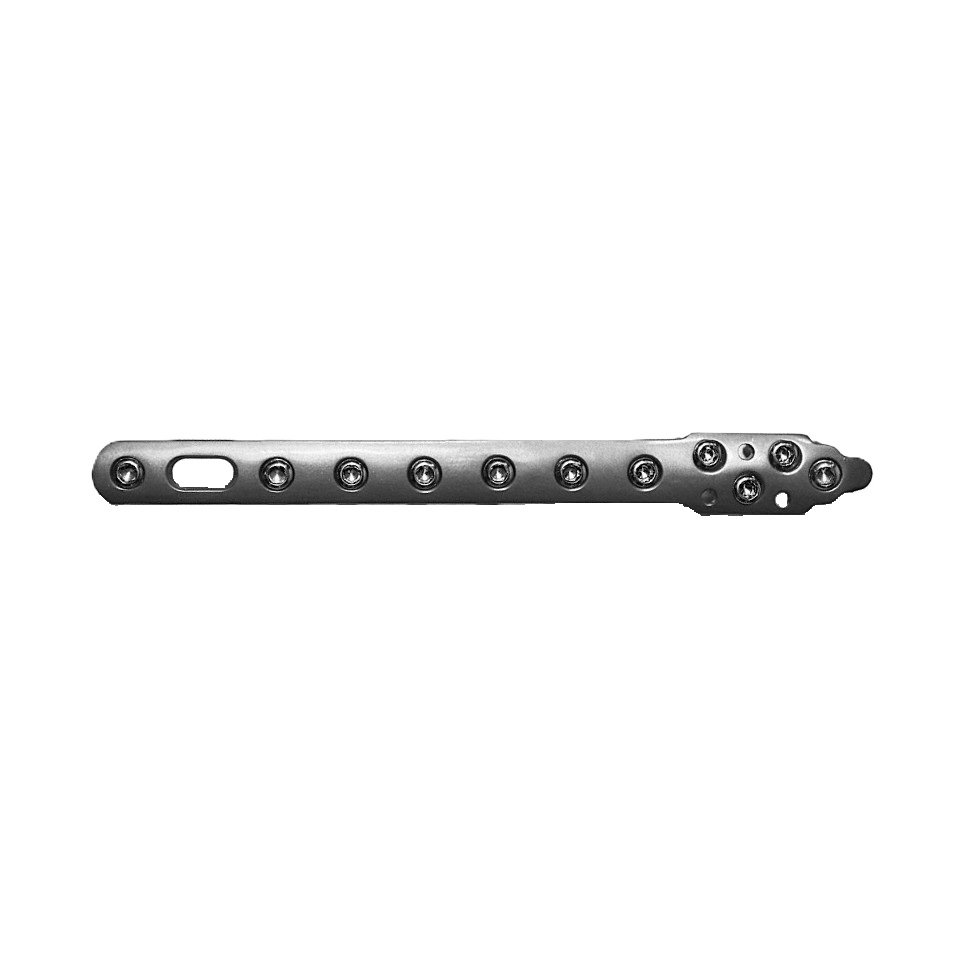
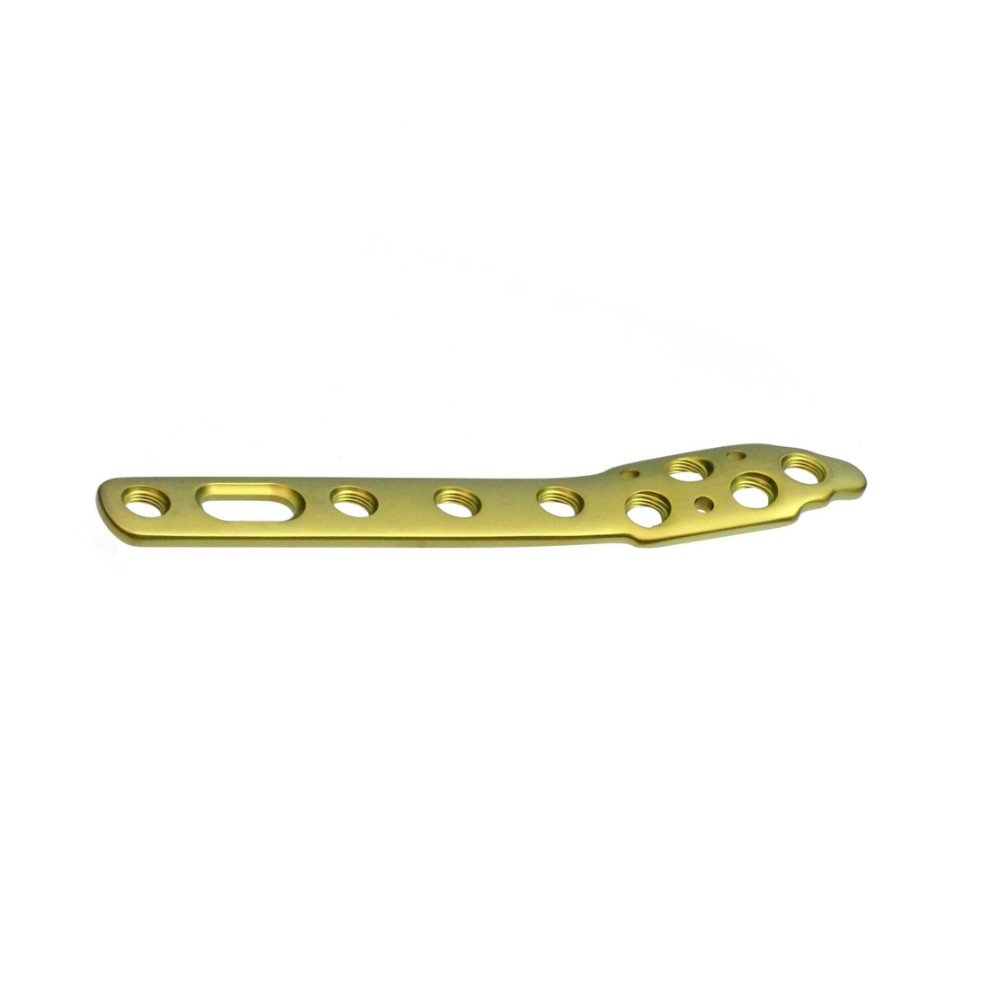
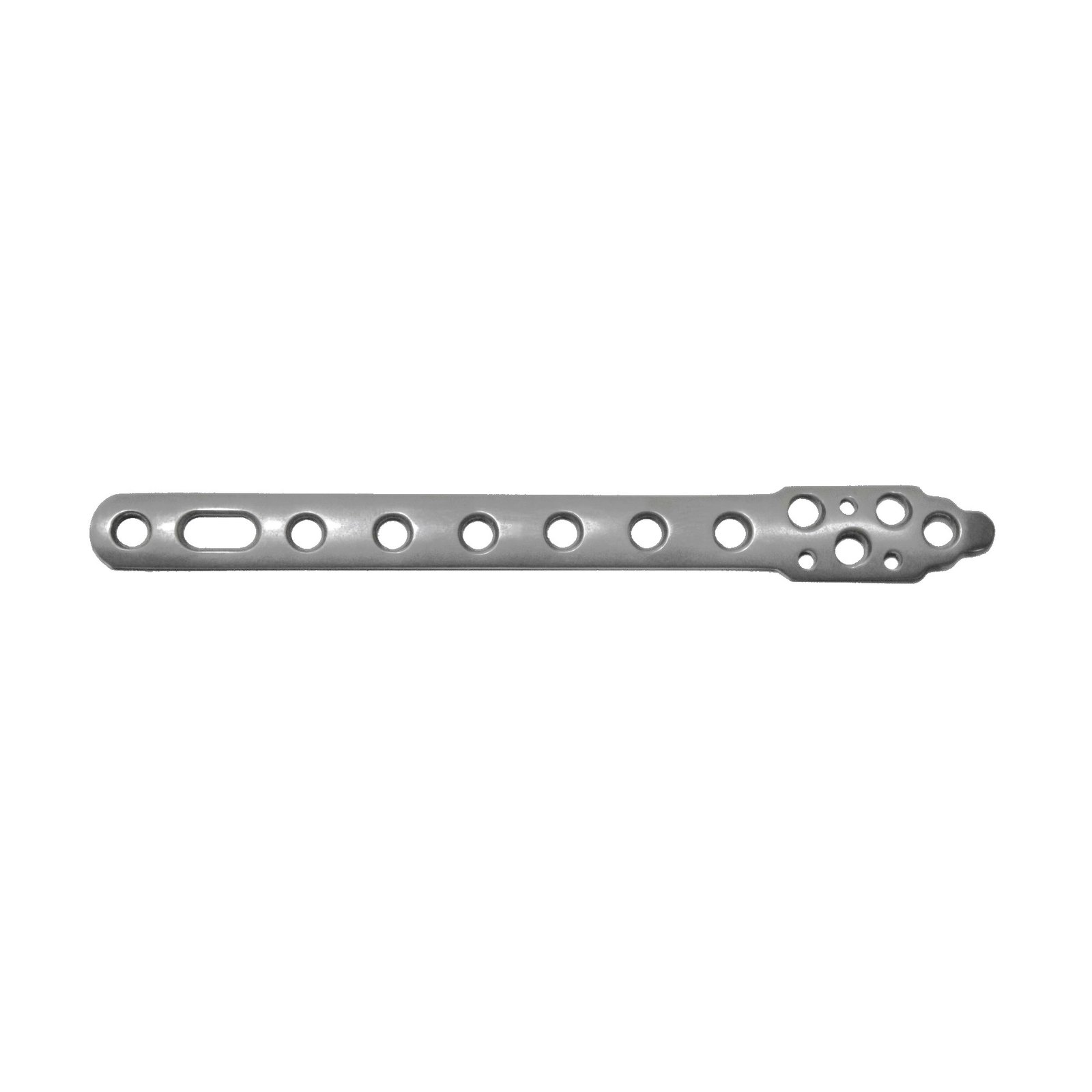
3.5MM Lateral Distal Fibula LCP
+ Description
One of the lower leg bones, the distal fibula, is located outside the leg and is smaller than the other. It is also the name of the bone. It is a very important factor in ankle stability, especially when it comes to responsibilities that require weight-bearing.
It is possible for this area of the body to sustain a fracture as a result of trauma or repeated stress, and it may be challenging to treat because of the complex structure of the bone and its position that it is located in the ankle joint.
+ Indications
- Distal Fibula (Lateral Malleolus) Fractures
- Simple, oblique, or transverse fractures
- Comminuted or unstable distal fibular fractures
- AO/OTA Type 44-A, 44-B, and 44-C fractures
- Ankle Fractures with Syndesmotic Injury
- Fixation of fibular fractures in conjunction with syndesmotic stabilization
- Osteoporotic Bone Fractures
- Provides angular stability in patients with poor bone quality
- Nonunions and Malunions
- Reconstruction and realignment of previously unhealed or malaligned distal fibula fractures
- Periarticular Fractures
- Fractures extending near the ankle joint that require stable fixation to restore joint congruity
- Corrective Osteotomies of the Distal Fibula
- Performed for realignment or deformity correction around the ankle
+ Key Features
- Available in both Titanium & Stainless Steel
- Left and Right Lateral Distal Fibula Plate available
- Surgeons can choose between titanium and stainless steel when it comes to the LCP Distal Fibula Plate so they may meet the individual demands of their patients.
- The anatomical design of the plates is such a tight match to the distal fibula’s form that they provide an ideal fit and maximum stability.
- Along the plate shaft, you’ll find “combi-holes,” which are a mix of locking screw holes and DCU holes. Combi-holes provide a versatile solution for fracture repair, allowing for both axial compression and locking capabilities.
- Kirschner wires (K-wires) inserted through the plate’s holes provide a temporary fixation solution that helps determine the plate’s eventual location by securing it to the bone.
- Locking screws like a set of tiny, angled blade plates, these screws form a structure with a fixed angle. As a result, the fracture is better able to recover and remains stable.
Product Ordering
| HOLES | LEFT | RIGHT | ||
|---|---|---|---|---|
| SS | TI | SS | TI | |
| 3 | 1102SS03 | 1102TI03 | 1103SS03 | 1103TI03 |
| 4 | 1102SS04 | 1102TI04 | 1103SS04 | 1103TI04 |
| 5 | 1102SS05 | 1102TI05 | 1103SS05 | 1103TI05 |
| 6 | 1102SS06 | 1102TI06 | 1103SS06 | 1103TI06 |
| 7 | 1102SS07 | 1102TI07 | 1103SS07 | 1103TI07 |
| 9 | 1102SS09 | 1102TI09 | 1103SS09 | 1103TI09 |
| 11 | 1102SS11 | 1102TI11 | 1103SS11 | 1103TI11 |
For More
- Explore our full range of trauma implants for optimal surgical outcomes
- Explore our full range of trauma implants for optimal surgical outcomes.
- Learn more about clavicle fractures and their treatment from the American Academy of Orthopaedic Surgeons